Showing posts with label orphans. Show all posts

Thursday, May 10, 2012

A visit to the African Children's Feeding scheme

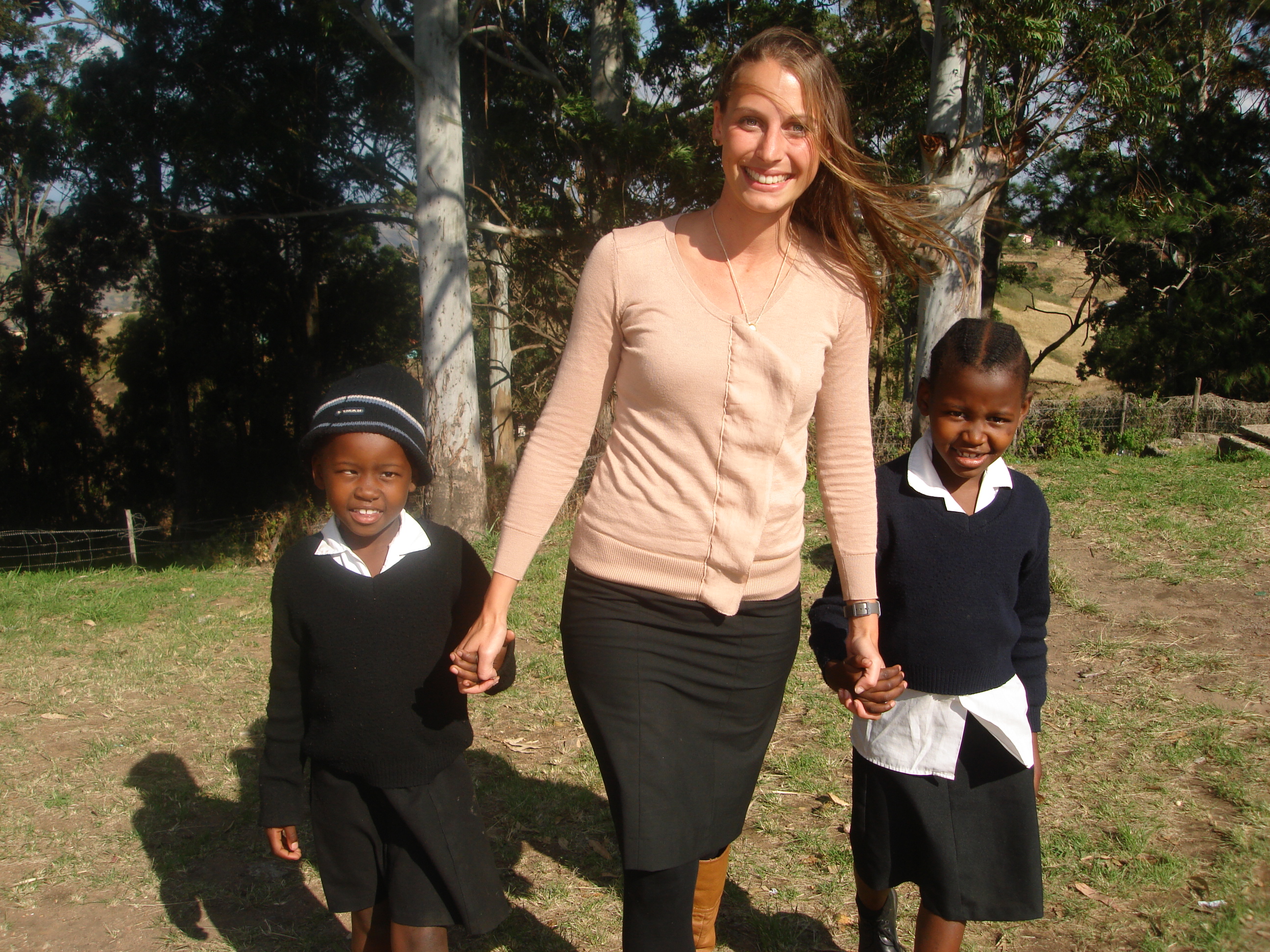
After the Shwe Shwe poppies (see my last blog post) we went to the Creche were the children are during the day, the ones who drew the poppies are bigger now and not at the centre anymore. But many other children are there and we were looking forward seeing them.

Outside the centre we saw that many women were tending small plots of gardens, so there is more to this centre than meets the eye at first.

There are in total 13 centres like this in SA and in total they feed 31 000 children from poverty-stricken homes are fed daily by ACFS. Many are orphans affected or infected with HIV/Aids – and this could well be their only meal of the day.
Food is prepared at each of the 13 community centres. Children who go to school within walking distance of one of the centres come at break time or after school for their daily meal.
Records are kept for each child – and failure to collect their meal acts as a warning that something may be amiss at home; one of our sisters will then call to check on the family at home.

Communal vegetable gardens at each of the 13 centres encourage and teach women (and some men!) how to grow their own food.
Each woman is given her own vegetable bed and is responsible for planting, weeding, watering and reaping – with help on hand if she needs it.
Even though the beds are small, by planting three or four different types of vegetables in rotation, enough food can be grown all year round to feed an entire family.
Once the women gain the necessary skills and confidence, they are encouraged to start their own vegetable patch at home. Surplus cabbages, potatoes and carrots can be sold to neighbours to earn a little extra income.

We had a peek into the kitchen of the centre and today on the menu was Pap and Fish, from the cans you see on the table there. Simple but at least these children are lucky to have a warm meal a day!


These children are left alone after the death of their parents: penniless, frightened and the centre takes care of these children. To see these precious faces it just broke my heart!


They showed us some songs and dances they had learned at the centre and this is the song of the national Anthem, all with their hands on their hearts and in the air, so so cute!!


Outside during recess they all wanted to high five me or do the African buddy thingy... touching your tumb with their tumb. All craving the attention of us....


Such a wonderful organisation, they do such good work! See their website of all the other things they do and maybe you like to help in one way or the other. Which is possible even if you live overseas!

Now I want to even buy more Shwe Shwe poppies, so we can help these children! Next time I will visit them I also will bring them some lollipops, I so wished I had them with me when I saw all these precious faces, but we had no clue when we started this trip that morning we would come here.

Next time I will be better prepared!!

But the day was not over yet... now we were heading for a lunch of a life time!!
Next blog post more about that...

Ciao, Mireille

Thursday, September 22, 2011

Spotlight on: THANDA

Being back in South Africa reminds me daily again what a struggle a lot of people go through. The thing is when you live like me in Fourways, a rich suburb of Johannesburg that you don't immediately think of the poverty, the anguish, the sorrow a lot of locals go through. But I feel that we need to put the spotlight on these people and remind ourselves how blessed we are.

How lucky we are!

That our cradle was there were it was, and NOT here in South Africa amongst these poor people with no access to food, to education, to medication or a roof above their heads and being cold in these harsh winters.

I came across this website and organization that a young girl age 27 started. Five years ago at the age of 22, Angela Larkan established non-profit organization Thanda.org to fight the destructive impact of HIV/AIDS and poverty on rural communities.

Today, Angela’s project supports 325 children daily, and she is working to bring hope to thousands more through her model for community change.


source: here

This inspiring young woman is defining a new approach to ending poverty and HIV/AIDS in rural communities, and developing a new model of orphan care that could be implemented throughout Africa. Angela’s pioneering local work is now about to make global headlines as part of the iconic Levi’s® brand’s new ‘Go Forth’ campaign.

The campaign, a global rally to create positive change in the world today, is showcasing the work of pioneering individuals from across the globe who are tackling the greatest challenges of our time.

Angela runs the Thanda after-school program in Kwa-Zulu Natal for the second year now, and on her website and blog you can read her AMAZING story! She is one of the most impressive 27-year-olds I've heard about in a long time and her work with Aids orphans is truly amazing!

Read, listen, watch & Support if you can!

- South Africa has the HIGHEST number of people in the world living with HIV/AIDS. ~ 5.3 million!
- Estimates say that by 2015 SA will have 5.7 million orphans.
- In rural Kwa-Zulu Natal, the daily life of many is a battle for survival.
- Under such harsh circumstances, the quality of education suffers greatly.
- But for many children, education is the only hope for a better life.
- The Thanda After-School Project empowers students to rise above the harsh circumstances surrounding them.


See this young boy move his body and dancing Thanda style, it will brighten your day!! It will lift your spirits!


If you are touched by these children, go to the Thanda website here and support them!!

Please ~ they need your help!!

Think about how good your children are living, and compare them with these precious children.

HELP!

YOU CAN DO IT!!

Thanks,
Mireille xx

Wednesday, January 20, 2010

My heart goes out to all the children & orphans of Haiti!

I am thinking of all the children in Haiti all the time, children who are lost and hungry, maybe even hurt and walking around without any parents or family in Haiti, and it breaks my heart! Also thinking of the orphans who are waiting to be adopted. Must be a terrifying experience for all these precious children and adopted parents!! What if you were in a position that you are on the waiting list or already matched with a child from Haiti? How devastating you must be! You want your child as soon as possible.... catch a plane and get the child yourself, but of course that is not even possible, but the feeling that rages inside you must be just heartbreaking!!


I found this article here and wanted to share it with you:

Haiti Q&A: The ethics of disaster adoption

Q. How many orphans are there in Haiti?

A. There were already about 380,000 orphaned children in Haiti before the earthquake. The Caribbean island, which has a population of about 10 million, may now have more than a million children without parents.


A. Adoption agencies around the world have been flooded by enquiries from the public about adopting Haitian orphans. The Joint Council on International Children's Services (JCICS), a US advocacy organisation, says it has received 150 enquiries about Haitian adoption in the past three days, compared with about 10 a month usually. Some children – who were already in the final stages of being adopted by overseas parents when the quake struck – have already been airlifted out of Haiti, and the US has eased restrictions as a humanitarian gesture, as have France and Canada.

A chartered Dutch plane will arrive in Haiti today to airlift 109 more children, most of whom have already been matched with families in the Netherlands but whose adoptions have now been fast-tracked. Meanwhile, 53 orphans have already been flown to Pittsburgh, Pennsylvania. Indiana-based Kids Alive International, which runs orphanages around the world, is expected to take 50 Haitian orphans to group homes in the Dominican Republic. The Catholic Church in Miami has asked the US government to allow thousands of orphaned Haitians to settle in America, in a scheme modelled on an initiative for Cuba, Operation Pedro Pan, in the Sixties. Under that scheme, 14,000 unaccompanied Cuban children, offspring of parents who opposed Fidel Castro's government, began new lives in the US.

Q. Is it ethical to relocate children from disaster zones?

A. There are honourable precedents such as the Kindertransport programme during the Second World War, which saved 10,000 Jewish children by bringing them from Nazi Germany to Britain. But children's advocacy groups warn against mass airlifts of youngsters overseas in the wake of natural disasters. They cite the 2004 tsunami and the Kashmir earthquake in 2005, arguing that the clamour surrounding children created a legal and ethical free-for-all.

Given the chaotic state of communications in Haiti right now, a big fear is that some children may be shipped overseas without proper checks to see if any extended family members are alive.


Q. Could any of them be evacuated to safety, or even to a better life abroad?

As for the impact on small children, some experts believe foreign adoptions, or being taken into care in an unfamiliar environment, could be psychologically traumatic. SOS Children's Villages, the children's charity has issued a warning that uprooting children in such situations can be stressful and unsettling, and lead to long-term psychological problems for infants who are expected to grow up in an alien culture.

"When you see any child who has lost their family on the news, your natural instinct is to want to go and pick them up and cherish them," it said. "Sometimes international adoption is the right solution for a child, but far more often it is not."

Adoption expert Professor René Hoksbergen, of Utrecht University in the Netherlands, also warns that the hurried evacuation of children may send the wrong signal, encouraging people to assume that children in chaotic situations can be easily relocated. Some of the children evacuated from Cuba under Operation Pedro Pan ended up stranded in remote parts of the US, far from other Cubans, and have since spoken of how the experience scarred them.

Q. Is there a better way?

A. Charities argue that it is more important to register all children, trace any extended family members, and work to rebuild the country rather than removing youngsters from their homeland. Unicef says its priority is to ensure that children affected by the earthquake get the help they need. "While both airlifts and new adoptions are based on valid concerns and come from an obviously loving heart, neither option is considered viable by any credible child welfare organisation," says the JCICS. "Bringing children into the US either by airlift or new adoption during a time of national emergency can open the door for fraud, abuse and trafficking."

Article by Sarah Cassidy, photo credits by Jan Sochor.

Please help Haiti, there are many different organisations out there who need your donation!

Mireille

LinkWithin

Related Posts with Thumbnails